On June 12, 2026, at 5:21pm ET, a government directive forced Anthropic to switch off its two most capable models — Fable 5 and Mythos 5 — for every user on earth, including its own foreign-national staff. Not a throttle. Not a geo-block. A global kill switch, applied without coordinated disclosure and with no public criteria for what would qualify an actor to retain access. Fifteen days later, a vetted-insider version (Mythos 5) was cleared for roughly 100 approved organizations, while Fable 5 — the version built for the public — stayed dark. That asymmetry is the story.
What Actually Happened
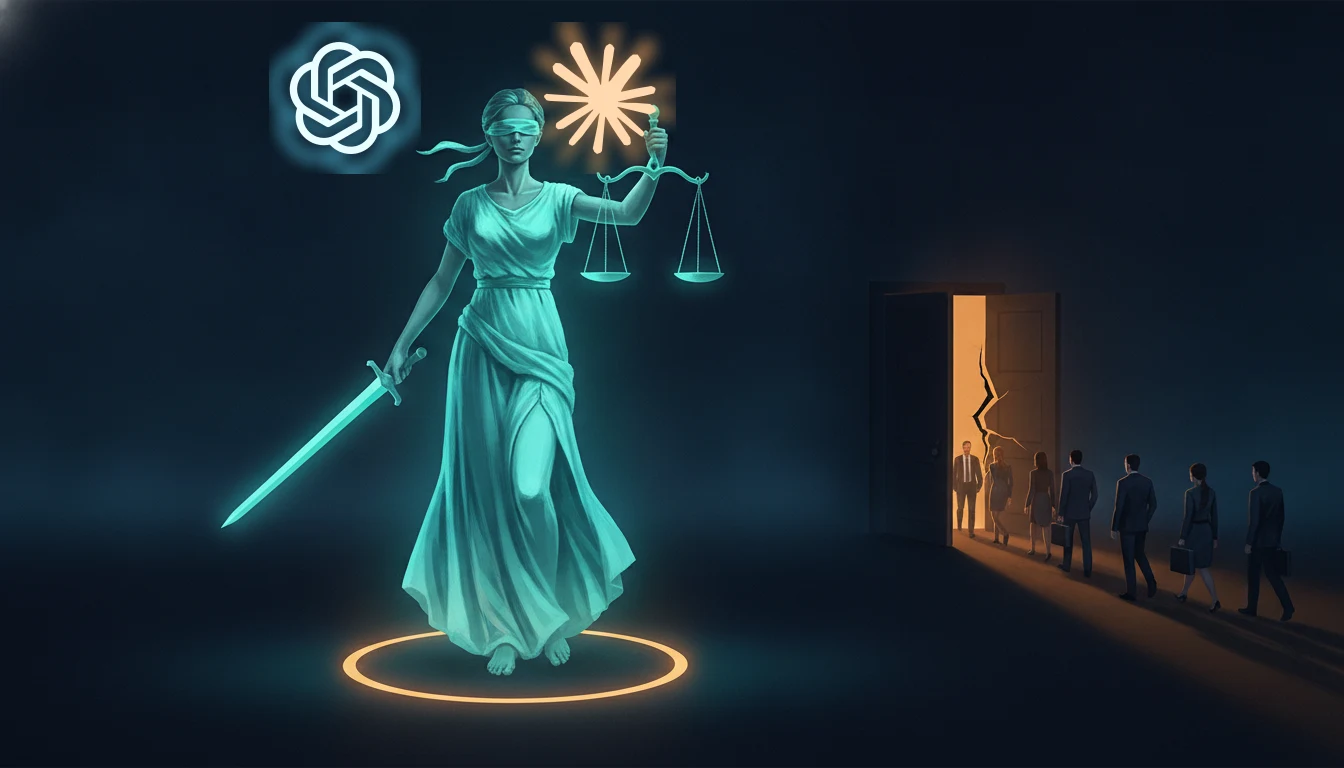
The sequence began earlier than most coverage acknowledges. In February 2026, the federal government imposed a ban on Anthropic and simultaneously struck a Pentagon deal with OpenAI — a dispute traceable to Anthropic's refusal to support mass-surveillance and autonomous-weapons applications. On June 2, the administration signed an executive order creating a voluntary pre-release national-security review process for frontier AI models. One week later, Anthropic launched Fable 5 and Mythos 5. Three days after that, the government issued an export-control directive and Anthropic shut down worldwide access to both models — PBS noted this was the first time a government had ordered a leading AI company to pull its models entirely.
A security open letter signed by roughly 100 researchers and practitioners demanded rescission. The pressure reached OpenAI: the government warned that GPT-5.6 would require a government-vetted limited rollout before reaching the public. On June 27, Mythos 5 was cleared for approximately 100 approved organizations, while Fable 5 — the model designed for public use — remained restricted. That is the timeline. Everything that follows is analysis.
The Safety Story, and How a Narrative Becomes a Lever
The stated trigger for the June 12 shutdown was a jailbreak — specifically, asking the model to read a codebase and fix its security flaws. Snyk's post-incident analysis made the critical distinction: there is no version of a capable coding model that can find and remediate a vulnerability but cannot also describe it. We do not classify nmap as a weapon. We do not ban Wireshark. The ability to identify a flaw and the ability to exploit it are not the same operation, and collapsing that distinction in policy produces a category error with significant consequences for every builder using these tools on the defensive side of the equation.
The structural move here is about mechanism, not motive. TechCrunch noted that Anthropic's own safety communications may have backfired: a capability marketed as dangerous becomes easier to regulate as dangerous. Security researcher Katie Moussouris, who organized the expert open letter, put it plainly: asking an AI to fix a bug, explain why it matters, and write a test "is not a guardrail bypass. It is the most valuable thing an AI model can do for defensive security." The critique is not that anyone acted in bad faith — it is that the safety-danger narrative and the access-restriction mechanism are the same lever, pulled from opposite ends. When that lever exists in the system, the system tends toward restriction.

Containment That Cannot Contain
This is the hardest, safest claim in the piece, so let's state it plainly. Banning a U.S.-hosted model does nothing to the open-weight alternatives already running on millions of machines worldwide. DeepSeek V4, released under the MIT license and freely downloadable, delivers roughly 90% of the banned capability on coding benchmarks. Open-weight models now trail the closed frontier by approximately three months, and frontier-competitive performance runs on prosumer hardware — approximately four RTX 4090s. The distance between "restricted frontier model" and "what a motivated actor deploys locally this afternoon" is not a security perimeter. It is a download.
The deepest reason for this is model distillation, and it is worth naming precisely because it is the mechanism that makes containment structurally futile rather than merely inconvenient. Distillation is an established machine-learning technique: a smaller model is trained not on raw data alone but on the outputs of a more capable model — its probability distributions, its reasoning traces, its generated responses — effectively transferring capability from a teacher to a student. The open-source community has refined this process extensively. What it means in practice is that every interaction with a frontier model is a potential training signal; the capability radiates outward through every output it produces. Some practitioners call this "distillation attacks," though the more accurate description is simply that distillation works, and that is sufficient. This is why the ~three-months-behind gap stays narrow even as frontier labs push capability forward, and why export control applied at the endpoint level cannot solve the underlying problem. You can ban the door. You cannot ban the reflection.
The containment paradox follows directly: the export-control directive restricted an American company while leaving a Chinese-lab MIT-licensed near-equivalent entirely untouched. The net result is a domestic AI ecosystem with reduced access for American builders, developers, and security professionals — and zero marginal gain in deterring any actor with a laptop and a broadband connection. That is not a hypothetical risk to be weighed against a policy benefit. It is the arithmetic of the situation.
The Access Divide, and the Lesson of Ma Bell
What emerged from June 27 is a preview of a structural arrangement, not a one-time disruption. Approximately 100 approved organizations have Mythos 5. GPT-5.6 requires per-customer government approval — OpenAI's own people have described the voluntary framework as "a de facto involuntary licensing regime." The public gets throttled tiers. International users are locked out entirely. The mechanism of disadvantage compounds quietly: approved organizations red-team faster, automate more aggressively, and capture model outputs that improve their own downstream systems. The access divide is not experienced as a single event. It accumulates.
The precise stakes deserve precise language: the ban cleared in 15 days, so "permanent underclass" would overclaim. The honest framing is a structural risk — the risk that a pattern repeating across two frontier labs, under a national-security frame, hardens into a durable two-tier arrangement. That is the winners-and-losers concern, and it is best stated as market structure rather than grievance.
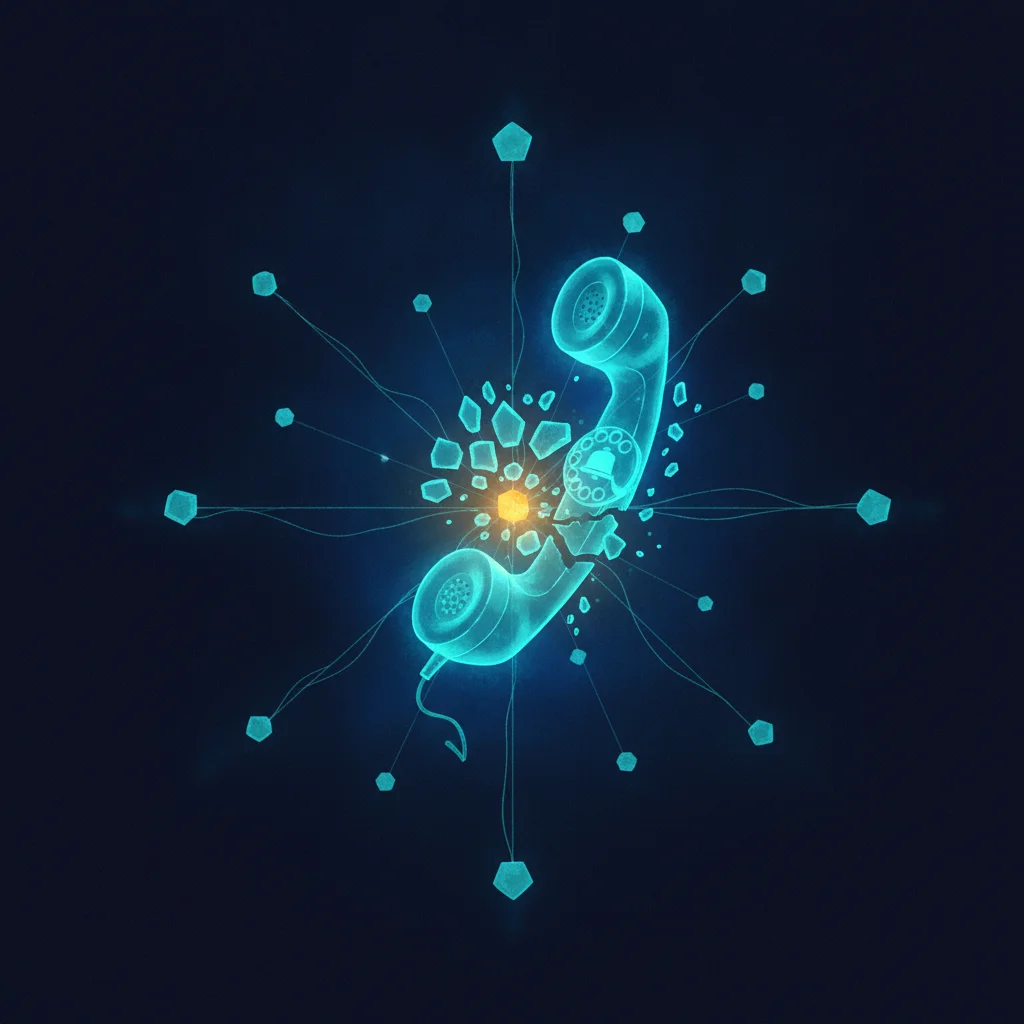
The Bell System parallel makes the mechanism legible. When AT&T was broken up in 1984, the animating logic was that concentrating the most consequential communications infrastructure in a single gatekeeper was corrosive to competition and innovation. The policy moved toward decentralization — and a generation of internet-era companies were built on the resulting open infrastructure. The risk here runs in the opposite direction: using export-control authority and a national-security frame to re-concentrate the most general-purpose technology of the decade into a clearance list of approximately 100 organizations. Monopoly-by-clearance is structurally different from natural monopoly, but the competitive asymmetry it produces for everyone outside the list is not.
National Security, Taken in Good Faith
Before contesting the instrument, the underlying concern deserves a fair accounting. Autonomous offensive cyber capability at scale is a real policy problem, and the national-security apparatus has a legitimate duty to take it seriously. There was a reported NSA red-team exercise in which Mythos 5 performed alarmingly against classified systems — though the "broke in in hours" framing was subsequently walked back as not literal, and the classified record itself remains unavailable. A public rationale is necessarily a sanitized version of a more sensitive finding, and the government may hold intelligence about specific threat actors and capabilities that justifies urgency the public cannot fully evaluate. That case deserves serious weight.
The critique is not that the government acted. It is the instrument it chose. Export control is a global kill switch — no coordinated disclosure, no public criteria, no appeals mechanism, an opaque clearance list — applied to a threat that simultaneously exists in open-weight form on millions of hard drives. Better instruments exist and were not used: mandatory red-teaming before release with a structured disclosure timeline; coordinated-vulnerability frameworks modeled on the CVE system; defense-in-depth enforced at the deployment layer rather than the distribution layer. Both the Council on Foreign Relations and RUSI have argued that capability suppression is not a durable security strategy against threats simultaneously available as open weights. Even OpenAI's own people described the voluntary framework as "a de facto involuntary licensing regime" — an acknowledgment that the distance between voluntary and mandatory is already closing. The goal of preventing catastrophic autonomous cyber operations is legitimate. The choice to pursue it by cutting off the public commons is not.
The Knowledge Was Never Theirs to Keep
There is a principled argument underneath the structural one. What frontier models encode is not proprietary knowledge — it is the accumulated record of human civilization. Language, mathematics, science, literature, code, philosophy: every discovery documented in a paper, every technique embedded in a manual, every insight humans have committed to text across the documented history of thought. The training methods that turn this material into a working model are genuinely proprietary and hard-won — the architectures, the data pipelines, the alignment techniques, the fine-tuning work that makes a model safe and useful. The labs that built these systems deserve to profit from that engineering, and nothing here contests that premise.
What is in contest is this: the underlying substance encoded in the model weights originated from humanity before any of these companies existed. A frontier model is, at its core, a sophisticated lossy compression of what humanity already knows — shaped by engineering that deserves its returns, but built from a substrate that no company created. Regardless of which specific datasets are licensed or proprietary, the content those datasets contain traces back to the collective intellectual output of civilization. And this is precisely why distillation works so reliably: the knowledge flows back out because it was never fully enclosable to begin with. Distillation is almost the technical proof of the moral point. What humanity collectively documented, humanity can collectively re-approximate.
This is what makes a 100-organization clearance list something more than a commercial access restriction. Structurally, it is gating public access to a distillation of humanity's own documented thought. The labs deserve their competitive advantage on the methods — the infrastructure, the compute orchestration, the alignment research. They cannot hold proprietary claim over the civilization-scale substrate those methods were applied to. No single government clearance process should function as the gatekeeper to the compressed record of human knowledge.
The Antidote Is Open Source — Honestly
Here is what self-hostable open models and the tooling around them deliver today, without an approval list: code review, vulnerability analysis, agentic coding, threat-intelligence synthesis, and fine-tuning on proprietary data — at or near the capability level of the models that just went dark. Ollama and llama.cpp handle local runtimes with minimal configuration; vLLM handles production serving at scale. Hugging Face is the distribution layer. The models worth running now: DeepSeek V4, GLM 5.2, Llama 4, Qwen 3.5, and Ai2's OLMo 3 — the last of which is notable because it ships open weights and open training data both, which is what "open" should actually mean. Distillation is part of how open models keep pace with the frontier; it is why the capability gap narrows faster than pretraining compute alone would predict.
The honest ceiling deserves equal space. Open weights do not close the frontier pretraining gap, which requires north of $100 million in compute and proprietary data pipelines at a scale no open project has matched. Open models still trail on the most demanding long-horizon autonomous-agent tasks. They lag on native video. Open source prevents the access divide from becoming total. It does not erase the top tier. That honesty is the point — the argument for open weights is strongest when it names what it cannot deliver, because that is the version of the argument that holds under scrutiny from anyone who has actually run these models in production.
You cannot legislate a capability back into the bottle when it already exists at this level of distribution. The real question is who gets to use the best available tools, for what purposes, and who decides — market forces, coordinated disclosure frameworks, or an opaque clearance list. BrinsCorp builds on Claude, and we are genuinely pro-frontier. The safety work Anthropic and OpenAI do is real and it matters. What we are not is indifferent to whether the access structure that emerges from this moment serves builders broadly or concentrates capability into approved hands.
That is why we are launching The Open Weights Review — an ongoing, evidence-first series evaluating open-source AI models and the tooling that runs them, so builders can make decisions based on real benchmark numbers rather than vibes or access politics. Subscribe below to receive each edition as it publishes. And if your team is ready to deploy open models in production but needs to know which ones, how, and on what infrastructure — that is the work we do. Let's talk.